

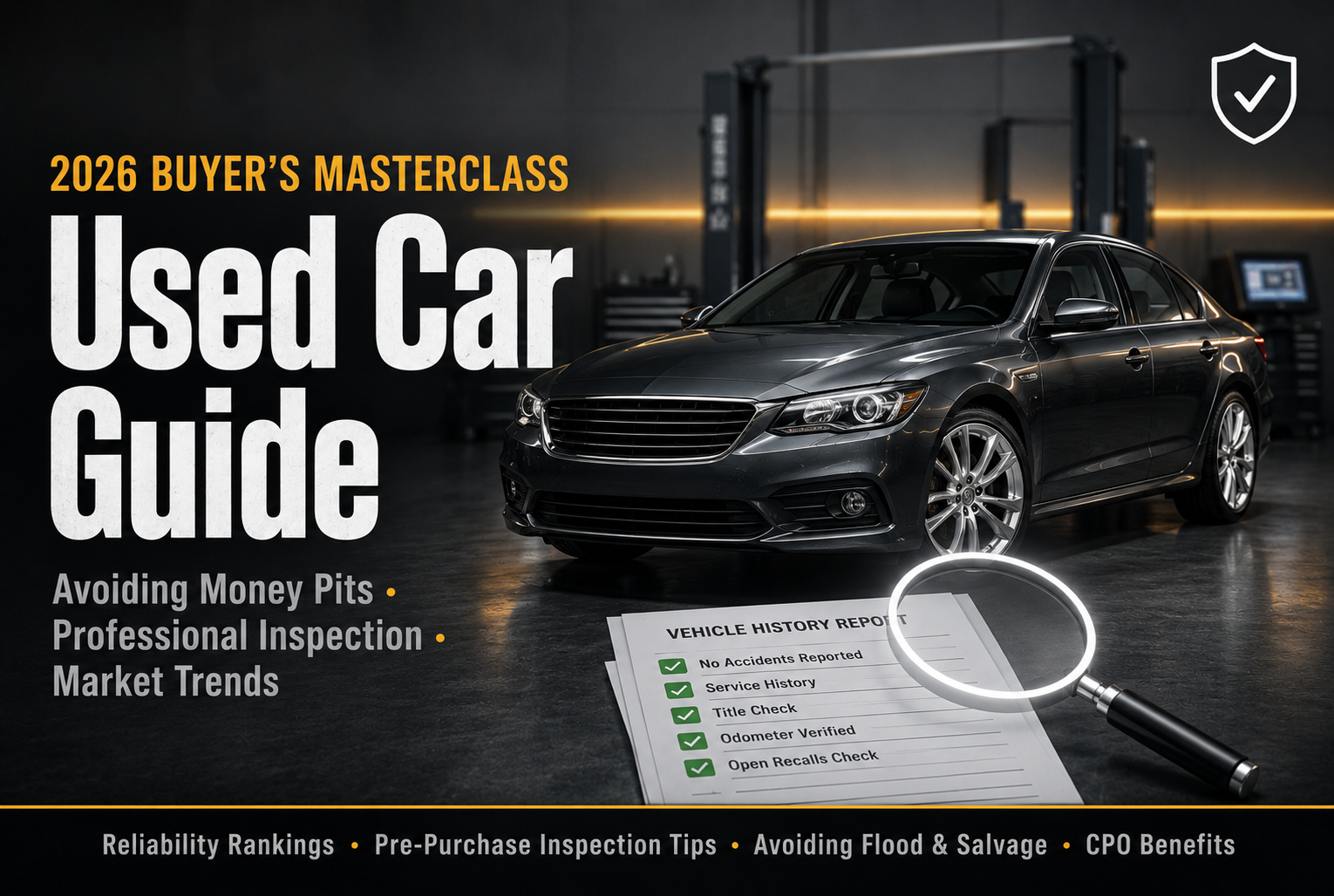
The Ultimate Used Car Guide for 2026: How to Find a Reliable Vehicle Without Getting Scammed
I vividly remember the exact afternoon I bought my first used car.
I spend an absolute diagnostic amount of time analyzing automotive market shifts, reading through dense vehicle history reports, and debating the merits of different powertrains. But back in my early twenties, I didn’t care about any of that. I just needed a car that would start every single morning, get me to my job, and not completely bankrupt me when it needed a repair. I found a local listing, met a guy in a gas station parking lot, handed over a stack of cash, and drove away.
Looking back, I realize that I was statistically lucky that the engine didn’t fall out of the car on the drive home. I had absolutely no idea what I was doing.
Let’s just be completely real for a second: buying a used car in 2026 is a completely different, high-stakes game than it was a decade ago. We aren’t just talking about checking the oil and listening for weird noises anymore. We are talking about navigating a massive, global market worth over a trillion dollars, dealing with complex software-defined vehicles, and trying to avoid “money pit” cars that have been quietly filtered out of the new car market.
For the average buyer, the used car market right now feels like a minefield. Prices are high, inventory is volatile, and the fear of buying someone else’s expensive electrical problem is very, very real. But despite the fear, there is an absolute gold mine of reliable, affordable transportation out there if you know exactly how to look.
Because the state of the used car market is changing at a breakneck pace—with more EVs hitting the resale channels, and legacy automakers shifting their entire retail models—I wanted to create a single, definitive pillar of content for you. No corporate PR spin, no dealership sleight-of-hand, and no gatekeeping. This is your complete, deeply human guide to navigating the 2026 used car landscape. We are going to break down the “Must Avoid” list, how to perform a pre-purchase inspection that would make a mechanic proud, and exactly which models have earned the “bulletproof” title.
Grab a cup of coffee, have your checklist ready, and let’s pull the cover off the used car market so you can stop worrying and start driving.
Part 1: The State of the Market (Why 2026 is Weird)
To buy a good used car, you first have to understand the market you are stepping into. If you think the used car market is the same one you saw in 2020 or even 2024, you are already behind the curve.
The Dip, The Squeeze, and The Inventory Shuffle
According to recent industry forecasts from groups like the NIADA and Cox Automotive, we are currently seeing a slight dip in total used vehicle sales volume for 2026 compared to the over-performance of 2025. This sounds like good news for buyers—fewer people buying means more supply, right? Not necessarily.
The issue is Inventory Quality.
Lease maturities—the primary source of “good,” late-model, well-maintained used cars—are nearing a bottoming out. Dealerships are increasingly choosing to keep these high-quality vehicles for their own “Certified Pre-Owned” (CPO) programs rather than sending them to wholesale auctions where regular independent dealers or private buyers can get them. This means the cars hitting the open market are, on average, older and higher-mileage than they were two years ago.
The Electrification Wildcard
2026 is the year where the first “real” wave of used EVs is hitting the mainstream. We aren’t just talking about early, 80-mile-range commuters anymore. We are seeing late-model Tesla Model 3s, Ford Mustang Mach-Es, and Hyundai IONIQ 5s flooding the market as initial leases end.
This presents a massive opportunity, but also a massive risk. A used gas car’s condition can be judged by how it sounds and how it shifts. A used EV’s condition is judged entirely by its battery health. Buying a used EV requires a complete shift in your mindset—you are no longer checking for timing belt leaks; you are checking for battery state-of-health (SoH) reports.
Part 2: The “Do Not Touch” List (The Money Pits of 2026)
Every mechanic has a list of cars they groan at when they see them pull into the service bay. If you want to keep your bank account intact, these are the models, years, and categories you should stay away from.
1. Older, High-End Luxury SUVs
There is a massive trap in the used car market: the “Luxury Badge at a Budget Price.” You can find a 10-year-old high-end European SUV for the price of a mid-trim Honda Civic. Do not buy it.
The complexity of these vehicles—air suspensions, dual-clutch transmissions, advanced infotainment controllers—means that when they break, they break in five-figure increments. A $3,500 repair for a failed turbocharger or a $5,000 bill to replace a failing air-suspension compressor is not just possible; it’s statistically probable. If the car is out of warranty, you are not buying a luxury vehicle—you are buying a high-interest loan on an impending mechanical disaster.
2. Nissan Vehicles with CVT Transmissions (2013–2019)
If you are looking at a Nissan from this era, take a long, hard look at the transmission history. Many of these vehicles were equipped with JATCO-manufactured Continuously Variable Transmissions (CVTs) that suffered from systemic, class-action-level reliability failures. While Nissan has improved these massively in recent years, those mid-2010s units are notorious for “shuddering” and total failure at surprisingly low mileage.
3. Early Generation “Legacy Brand” EVs
Be extremely wary of first-generation EVs from companies that were just “testing the waters.” Models like the early Nissan LEAF are famous for having battery cooling systems that were, quite frankly, an afterthought. If you live in a hot climate, these early packs degrade to the point where the car becomes effectively useless in just a few years. Unless the battery has been replaced under a manufacturer warranty, skip these for peace of mind.
4. Certain Ford EcoBoost Trucks (2015–2019)
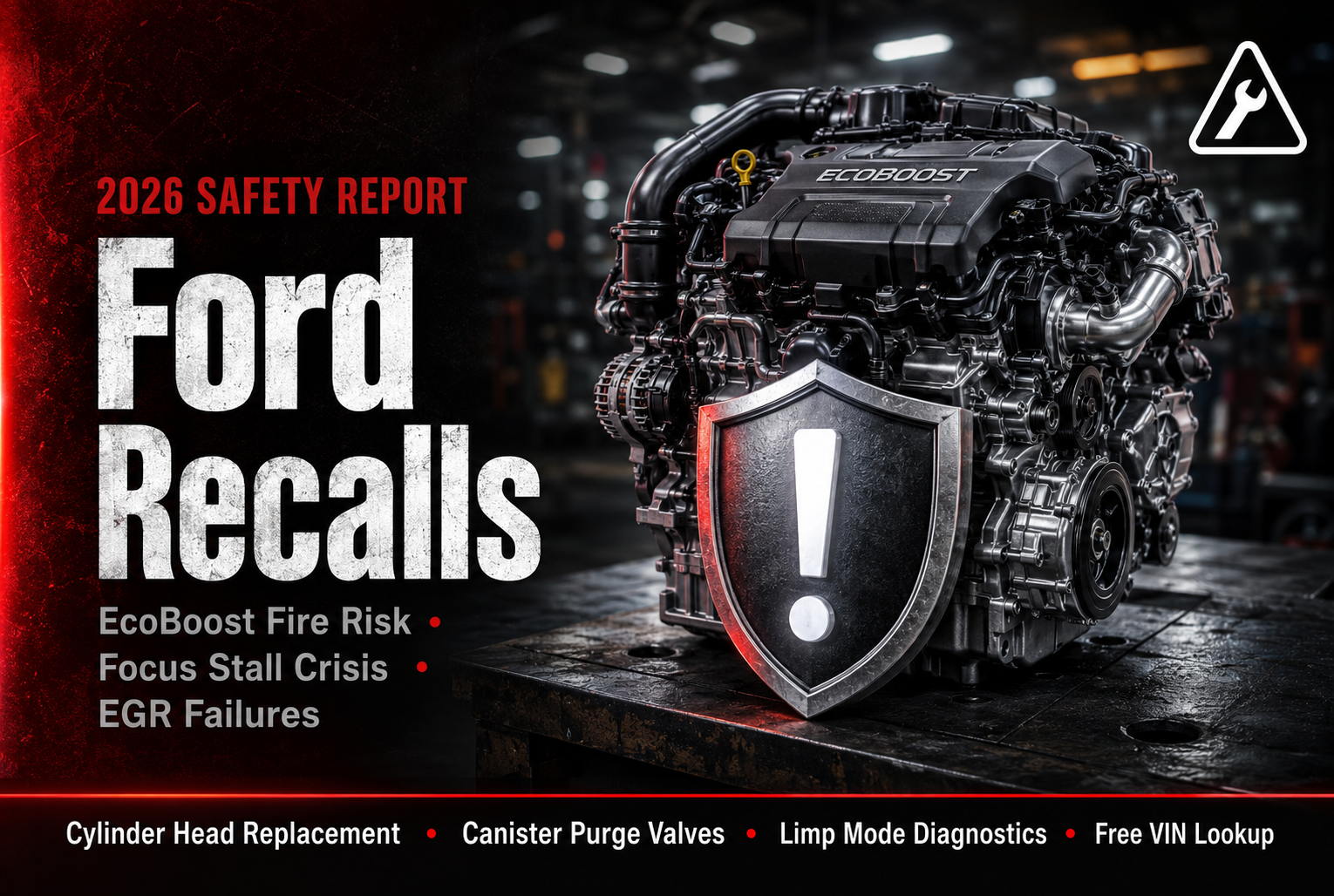
While the 3.5-liter EcoBoost engine is powerful, service techs point to recurring issues around the 100,000-mile mark. Timing chain stretching and cam phaser failures are common, and because the engine is so tightly packaged, these repairs often require pulling the entire engine out of the truck. This is a $4,000 to $6,000 “standard maintenance” item that you should factor into your budget if you insist on buying one.
Part 3: The “Bulletproof” Gold Standard
If you want a car that will survive the apocalypse and cost you pennies in repairs, you have to look for the “Toyota Tax.” Yes, Toyotas are expensive used, and they depreciate slower than any other brand. But there is a reason for that.
The Gold Standard: Toyota RAV4 (2019–2021)
This is the gold standard for a reason. It is the perfect size for 90% of families. The 2.5-liter naturally aspirated engine is incredibly simple and reliable. It doesn’t use complex turbos. It isn’t trying to be a spaceship. It just works. If you find a single-owner, non-fleet RAV4 from this era with a full service history, buy it. You will likely be driving it in 2035.
The Reliable Sedan: Toyota Camry (2018–2022)
The Camry is the “fine wine” of the automotive world. It ages perfectly. It is frequently owned by drivers who follow strict maintenance schedules. If you find one, stick to the 2.5L 4-cylinder models for maximum long-term simplicity.
The Hidden Gem: Mazda3 (2019–2021)
If you are tired of the “Toyota Tax” (the premium you pay for the name), look at Mazda. The 2019-2021 Mazda3 is a secret weapon. It avoids the CVT issues that plague other compacts, it uses a traditional 6-speed automatic transmission that is rock-solid, and the interior quality is significantly higher than a comparable Civic or Corolla of the same era. It is a premium-feeling car that maintains a low-key, high-reliability profile.
Part 4: How to Inspect a Used Car Like a Professional
You have found the perfect car online. You are ready to meet the seller. Most people just walk around, kick the tires, and go for a five-minute drive. That is how you get scammed. You need to inspect the vehicle like you are an engineer.
The Exterior: The “Accident Detective”
- Mismatched Paint: Look at the car from an angle. Are the panels slightly different shades of color? Do the gaps between the doors and the fenders look uneven? That is a sign of a bad accident repair.
- The “Gap” Test: Run your finger through the gaps between the hood and the fenders. They should be perfectly consistent. If one gap is wide and the other is tight, that car was likely in a front-end collision.
- The Glass: Look at the bottom corner of every piece of glass. Does the manufacturer logo match? If the windshield has a different logo than the side windows, the glass was replaced. Ask why.
The Interior: The Truth Teller
- Wear Patterns: Look at the driver’s seat bolster. If the seat is shredded at 30,000 miles, the driver was likely getting in and out of the car aggressively, or the car has far more mileage than the odometer claims.
- The Tech: Turn everything on. Every button, every heater setting, every single window. If a window “struggles” or a button is sticky, that is a sign of a car that hasn’t been cared for.
- The Smell: If the car smells like “new car” but it’s a 2018, be suspicious. That’s likely a chemical masking agent covering up a mold or cigarette smoke issue.
The Mechanicals: Under the Hood
- The Oil Cap Test: Open the oil filler cap. Look for a “milky” white or coffee-colored substance on the underside of the cap. That is an absolute red flag—it means coolant is mixing with your oil, usually due to a blown head gasket. That is a “walk away immediately” sign.
- The Fluids: Pull the transmission dipstick (if it has one). The fluid should be translucent and reddish. If it is dark, brown, or smells like burnt toast, the transmission is likely on its way out.
- The Tires: Look at the wear pattern. If the tires are worn down unevenly on the inside or outside, the car has a suspension alignment issue or a bent frame.
The Test Drive: The “Truth Serum”
Do not let the seller talk during the test drive. Turn off the radio.
- The Cold Start: Ensure the car is cold when you arrive. If the engine is already warm, the seller might be hiding a cold-start issue (like a rattling timing chain or a smoke-emitting valve seal).
- The Braking Test: Find a safe road. Get up to 40 mph and brake firmly. Does the steering wheel shake? That’s a warped brake rotor. Does the car pull to one side? That’s a seized brake caliper.
- The “Transmission Thump”: In an automatic, does it shift smoothly? Or does it “clunk” when it goes from 2nd to 3rd? Trust your gut. If it feels wrong, it’s usually because something is wrong.
Part 5: The “Total Cost of Ownership” (TCO) Reality Check
One of the biggest mistakes used car buyers make in 2026 is focusing entirely on the sticker price.
If you buy a $15,000 car that requires $3,000 a year in repairs, you have effectively bought an $18,000 car. You have to factor in the TCO:
- Insurance: Check your insurance quote before you buy. A luxury sports sedan might have a lower sticker price than a Honda Civic, but the insurance premiums could be double.
- Fuel: If you do 15,000 miles a year, the difference between a 20 MPG vehicle and a 35 MPG vehicle is thousands of dollars over the life of the car.
- The “Maintenance Buffer”: Never, ever spend your entire budget on the purchase price. Always hold back $1,000 to $2,000 for immediate, unforeseen repairs (tires, brakes, battery, fluid flushes). Every used car, no matter how reliable, will need something within the first six months.
Part 6: Why “Certified Pre-Owned” (CPO) Might Save Your Sanity
If you are not a “car person,” do not buy a private-party vehicle from a gas station parking lot. Go to a franchised dealership and ask for a Certified Pre-Owned (CPO) vehicle.
CPO programs are essentially the manufacturer’s way of vetting their own stock. When a dealership sells a CPO vehicle, it has to pass a manufacturer-mandated multi-point inspection. Because the inspection is backed by the manufacturer’s warranty, they don’t dare skip the important stuff.
Buying a CPO vehicle usually grants you:
- An extended, manufacturer-backed warranty that is far better than a “used car lot” warranty.
- Roadside assistance coverage.
- Access to genuine parts and brand-trained technicians.
- A satisfaction guarantee (some brands even allow you to exchange the car if you hate it within the first few days).
You pay a “CPO Premium” for this, typically $1,000 to $2,000 more than a non-certified version of the same car. But for that money, you are essentially buying a “no-headache” policy. For many buyers in 2026, that peace of mind is worth every penny.
Final Thoughts: The Savvy Buyer’s Path to 2026
Buying a used car in 2026 doesn’t have to be a gamble. It is a process of information gathering, mechanical skepticism, and financial discipline.
The market has cooled, the inventory is stabilizing, and the era of the “unbeatable” seller is starting to fade. You have the leverage now. Use the resources at your disposal—check the VIN reports, demand a pre-purchase inspection from an independent mechanic, and don’t be afraid to walk away.
There are millions of cars out there. If the one you are looking at feels like it has been neglected, or if the seller is giving you “vague” answers about the maintenance history, don’t buy it. There will be another one.
The right car—the one that will get you to work every morning without breaking, the one that won’t give you heart palpitations every time you hear a weird noise—is waiting for you. Stay calm, be patient, and keep your standards high. A good used car is not just a tool; it is a long-term investment in your own mobility. Choose wisely.
Frequently Asked Questions (FAQs) About Buying Used Cars in 2026
Because the used car market is complex and filled with potential pitfalls, we have compiled the absolute most common questions buyers are asking in 2026 to ensure you have the facts.
Q: Should I buy a used EV?
A: Buying a used EV can be a great way to save money, but you must prioritize the battery condition. Always check if the seller can provide a “State of Health” (SoH) report for the battery. In 2026, many CPO (Certified Pre-Owned) programs now include specific battery warranties, which are significantly safer than buying a used EV privately.
Q: Is a high-mileage car with a great service history better than a low-mileage car with no records?
A: 100% of the time, yes. A car with 100,000 highway miles that has had its oil changed every 5,000 miles is objectively a better machine than a car with 40,000 miles that has never seen a garage. Maintenance is the single greatest predictor of vehicle longevity.
Q: Can I still negotiate the price at a dealership in 2026?
A: Yes. While the “no-haggle” online pricing model has become popular, there is almost always room to negotiate, especially on used inventory. If the car has been sitting on the lot for more than 45 days, the dealership is paying interest on it, and they will likely be much more willing to haggle to move it out.
Q: What is a “Pre-Purchase Inspection” (PPI) and why do I need one?
A: A PPI is a service where you pay an independent mechanic (not the one at the dealership selling the car) to put the car on a lift, check for structural rust, read the computer for “cleared” engine codes, and inspect the suspension and brakes. It typically costs $100–$200, but it is the single best way to avoid a $5,000 repair bill. If a seller refuses to let you do a PPI, walk away.
Q: Are interest rates still crazy high for used car loans?
A: They are significantly higher than they were in 2020. However, 2026 has seen a stabilization in rates. Before you go to the dealership, check with your local credit union for a pre-approval. Credit unions almost always offer better interest rates on used car loans than the “in-house” financing at a dealership.
Q: What if I find out the car was in a flood?
A: Run. Flood-damaged cars are “zombie” vehicles. They may look fine today, but the electrical connectors, sensors, and interior electronics will slowly corrode over the next few years. A flood-damaged car is a complete, unrecoverable loss. Always check for a “Salvage” or “Rebuilt” title; those are giant red flags that the car has been declared a total loss by an insurance company.
Q: Is it a good time to buy a used car in mid-2026?
A: According to the latest market data, the extreme price surges of 2024 and 2025 have stabilized. While we aren’t back to “pre-pandemic” prices, inventory is improving and dealerships are much more willing to negotiate. If you do your research and stick to reliable, non-luxury models, you are in a much better position than you were a year ago.
Q: What should I look for in the vehicle history report?
A: Beyond just “was it in an accident,” look for two things:
- Title History: Has it been a “Lemon” or “Salvage” title?
- Service Gaps: If the report shows a 2-year gap where no maintenance was recorded, the car was likely neglected during that period. Also, check the location history—a car that spent its entire life in a snowy, salted climate is much more likely to have hidden rust than one from a dry, desert climate.







Leave a Reply