

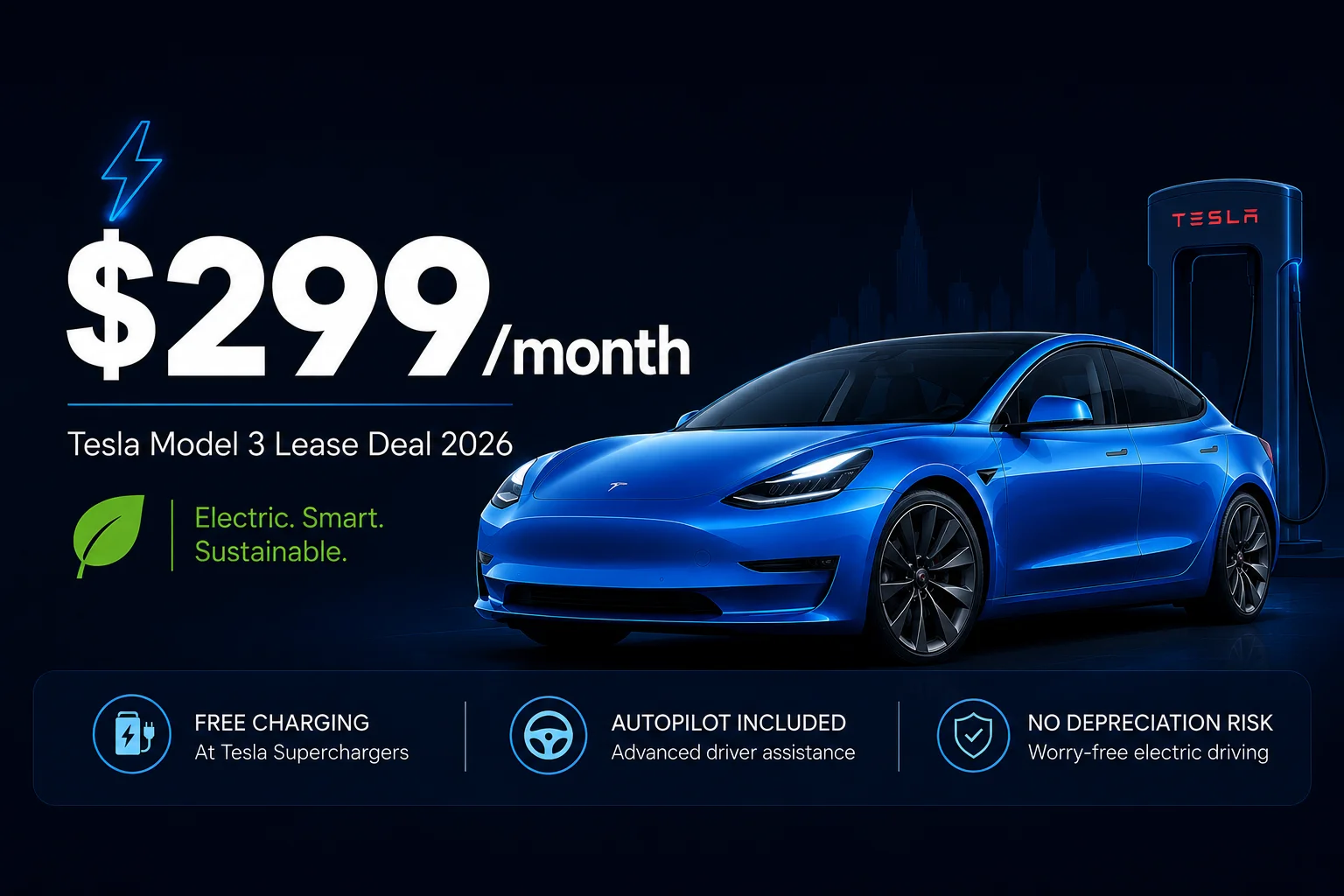
The Ultimate Guide to Tesla Model 3 Lease Deals in 2026
Have you noticed how trying to timing the electric vehicle market feels a lot like playing a high-stakes game of musical chairs? One minute you are looking at skyrocketing prices, and the next, a massive wave of inventory cuts sends prices tumbling down into impulse-buy territory. If you have been keeping an eye on a shiny new electric sedan, you are in luck because the tides have officially turned in a massive way for anyone hunting down tesla model 3 lease deals. Tesla just recently executed an aggressive, sweeping price cut across their entire sedan lineup, slashing the monthly damage by a clean $100 per month across the board and bringing the starting lease point down to a shockingly low baseline. This aggressive structural price readjustment is not just a passing promotional flash in the pan; it is a calculated corporate response to a rapidly changing automotive landscape where legacy premium heavyweights and shifting tech priorities are radically redesigning what you pay to plug in.
Decoding the Electric Shifts in Tesla’s 2026 Lineup
To understand why these lease numbers look so wildly attractive right now, we have to look at the massive corporate shuffle happening inside the walls of the Fremont factory. Earlier this month, Tesla quieted down the assembly lines for the veteran Model S and Model X, effectively taking their historical performance badges out to pasture while putting their primary muscle into autonomous software, Robotaxis, and the mythic next-gen Roadster. Because they are leaning so hard into becoming an artificial intelligence and robotics powerhouse, they needed a massive volume driver to keep their physical automotive ecosystem running hot while maintaining market dominance. What does that mean for you and your wallet? It means Elon Musk’s loss is your absolute gain because the company is pulling out every traditional dealership lever imaginable to push metal out of the door, completely shifting the financial math for casual drivers who want to bypass the massive headache of vehicle depreciation.
The Return of the Ultra-Affordable Standard Trim
Remember when everyone was screaming for a genuinely affordable, budget-conscious electric vehicle that did not require you to fork over a vital organ just to sign the paperwork? Tesla clearly heard the noise because they brought back a stripped-down, bare-bones variant known simply as the Standard RWD, acting as the primary anchor for the current lease push. This is a fascinatingly austere machine that scraps the high-end vegan leather for rugged textile cloth seats, deletes the ambient lighting across the dashboard, and removes the rear touchscreen entirely in favor of manual vent controls. But here is the massive kicker that has traditional enthusiasts cheering in the driveways: Tesla actually threw away the highly controversial steering-wheel turn buttons on this specific trim and brought back a legitimate, physical turn-signal stalk on the steering column. It feels like a beautiful concession to reality, giving budget-minded commuters a zippy, practical daily driver that cuts out the unneeded digital fluff to hit an unbeatable price floor.
From Long Range to Premium: The New Naming Blueprint
If you glance at the online configurator today, you might find yourself scratching your head wondering where the historical “Long Range” moniker disappeared to. Do not panic; Tesla simply rolled out a total structural renaming campaign, transforming the mid-tier configurations into the Premium Rear-Wheel Drive and Premium All-Wheel Drive variants to create a more obvious distinction against the newly introduced base model. These Premium models retain the luxurious treats you would expect, including the massive panoramic glass ceiling, the fully laminated acoustic glass that keeps the cabin as quiet as a sensory deprivation tank, and the upgraded immersive sound system. Alex Bernstein, a senior pricing analyst who tracks these market patterns closely, recently pointed out that “the structural price drops effectively re-establish the Model 3 as a distinct financial tier, creating a massive 28% affordability gap against the larger Model Y crossover.” By rebranding these trims, Tesla is signaling to the luxury market that you do not have to settle for an entry-level commuter experience if you are willing to step up just a tiny fraction on your monthly payment.
The Numbers Game: Breaking Down the $299 Lease Reality
Let us cut through the marketing noise and look at the absolute ground truth of the headline-grabbing deal that is plastering every automotive forum on the internet. Yes, the rumors are completely true: the base 2026 Model 3 Standard RWD is officially listed at an eye-popping $299 per month for a standard 36-month lease term. When you step back and look at the broader automotive landscape, finding a highly advanced, ultra-safe compact luxury vehicle for under three hundred bucks a month feels like finding a unicorn grazing in your suburban backyard. It represents a staggering 20% drop in effective lease costs compared to what the exact same vehicle commanded just a few short weeks ago, flipping the entire value proposition on its head. However, as any seasoned car shopper will tell you, the number printed in big bold letters on the billboard never tells the complete story of what actually leaves your bank account.
What it Costs to Drive Off the Lot Tomorrow
Before you drive down to the local delivery center with stars in your eyes, we need to talk about the cold hard cash required to actually sign the dotted line. To lock in that magical $299 monthly check, Tesla requires a total due-at-signing payment of $3,994, which is baked around a $3,000 down payment alongside your first month’s lease installment and a mandatory $695 acquisition fee. This upfront cash drop is a crucial variable in your lease math because sinking heavy capital into a vehicle lease can be a bit of a double-edged sword. If you happen to pull out of the lot and immediately get T-boned by a runaway dump truck, that $3,000 down payment is completely vaporized into thin air because insurance payouts go straight to the lessor, not your pocket. It is a completely standard industry layout, but you must make sure you have that clear financial buffer sitting comfortably in your savings account before committing to the drive-off structure.
The Hidden Fees and Mileage Traps to Watch For
Now, let us chat about the invisible guardrails that can turn a beautiful leasing dream into a massive financial headache at the end of your three-year honeymoon. The standard advertised lease caps your yearly travels at exactly 10,000 miles, which sums up to a grand total of 30,000 miles over the course of the entire contract. If you are a long-distance road warrior or have a brutal daily highway commute, you need to calculate your regular driving habits with absolute precision because going over that limit triggers a penalty of $0.25 for every single extra mile. Additionally, the advertised numbers completely exclude local state taxes, registration fees, and the hefty comprehensive insurance premiums required for a high-tech electric vehicle. You must also remember that Tesla is notoriously strict regarding structural wear-and-tear, meaning any curbside wheel rashes or deep interior stains will be met with a painful bill when you hand the keys back to the factory.
Comparing the 2026 Tesla Model 3 Trim Packages
Choosing the right flavor of Model 3 is all about aligning your daily driving anxieties with your monthly disposable income. Tesla has meticulously spaced out their product tiers so that every single jump in cost delivers a massive, tangible upgrade in physical hardware, battery capacity, or straight-line speed.
| 2026 Model 3 Trim Level | Monthly Lease Payment | Due At Signing | Battery Pack Size | Real Highway Range |
| Standard RWD | $299 | $3,994 | 70 kWh (LFP) | 270 Miles |
| Premium RWD | $349 | $4,044 | 80 kWh (NMC) | 310 Miles |
| Premium AWD | $449 | $4,145 | 80 kWh (NMC) | 330 Miles |
| Performance AWD | $599 | $4,295 | 80 kWh (NMC) | 295 Miles |
Standard vs Premium RWD: Is the Upgrade Worth It?
When you look at the $50 delta between the base Standard and the Premium RWD, you are looking at a classic battle between immediate cash savings and long-term daily comfort. The Standard model utilizes a smaller 70 kWh Lithium Iron Phosphate battery pack that pulled an actual 270 miles during recent independent 75-mph highway testing, which is a bit short of its paper estimates but still perfectly fine for city dwellers. Moving up to the Premium RWD untethers you from range anxiety by tossing in a larger 80 kWh pack, bumping real-world range over the critical 300-mile mark while unlocking the faster 250 kW Supercharging speeds. If you hate the idea of sitting in a austere cabin with cloth seats and manual steering wheels, spending the extra cash for the Premium tier is an absolute no-brainer that pays dividends in mental sanity every time you sit in gridlock traffic.
Performance AWD: For the Speed Freaks and Track Addicts
For those rare individuals who view a daily commute as a qualifying lap for a grand prix, the Performance AWD tier stands ready to completely rewrite your relationship with physics. Priced at a reasonable $599 per month on lease, this unhinged variant packs a walloping 510 horsepower dual-motor setup that rockets from a dead stop to 60 miles per hour in a face-melting 2.9 seconds. It rides on massive staggered wheels, utilizes aggressive track-tuned suspension damping, and features upgraded performance brakes designed to handle intense heat without fading out. While it lacks the mythical carbon-sleeved motors that the engineering team is currently reserving for the hyper-expensive Roadster, it delivers a level of raw, stomach-churning acceleration that can casually humiliate supercars costing five times as much.
Stealth Value: Free Supercharging and FSD Incentives Wrapped In
What turns a simple price cut into an absolute, historic blowout deal is the massive pile of promotional sweeteners that Tesla is currently stacking on top of the lease paperwork. The automaker is fighting tooth and nail to secure their market share this quarter, which means they are tossing in perks that directly slash your day-to-day operating costs to absolute zero. If you know how to work the system, combine referral programs, and apply for specific specialized credits, you can walk away with an asset that essentially pays for its own operational overhead. It is a classic example of a tech giant weaponizing its massive profit margins to starve out traditional automotive competition that cannot afford to give away free fuel.
Slashing Your Fuel Expenses with a Year of Complementary Charging
Can you imagine driving your vehicle for an entire year without ever spending a single red cent on fuel or electricity? Anyone who pulls the trigger on a Model 3 lease right now walks away with twelve full months of completely unlimited, free Supercharging across Tesla’s massive global fast-charging network. If you are a high-mileage driver or do not have the luxury of a dedicated Level 2 home charger installed in your garage, this single promotional perk can easily save you between $200 and $300 every single month. It completely flips the financial script, transforming what looks like a standard car payment into a comprehensive transportation package that effectively subsidizes your monthly budget.
Testing the Waters of Full Self-Driving Supervised Software
In tandem with the free electricity, every single new lease agreement automatically comes bundled with a complimentary multi-month trial of Tesla’s flagship Full Self-Driving Supervised software. This highly advanced autonomous suite handles highway interchanges, city street steering, traffic light identification, and complex lane changes entirely on its own while you monitor the drive. It is a fantastic way to experience the absolute cutting edge of automotive artificial intelligence without committing to the hefty permanent purchase price or the ongoing monthly subscription fee. Think of it as a low-risk, three-year extended trial run that lets you live deep in the tech-forward future while the engineering team at Fremont continuously pushes over-the-air software updates directly to your driveway.
Lease vs Buy: Calculating the Smartest Financial Move Right Now
This brings us to the ultimate crossroads that leaves every single car shopper scratching their head late at night: should you lease this electric machine or buy it outright? In the traditional automotive world, buying is almost always championed as the superior long-term financial play because it allows you to build real equity and eventually eliminate your car payment entirely. However, the electric vehicle landscape operates under a completely different, highly volatile set of economic rules where traditional car-buying wisdom can easily cost you thousands of dollars. The speed of technological advancement combined with aggressive corporate pricing wars has completely upended the historical asset model, turning vehicle ownership into a game of financial hot potato.
Why EV Depreciation Makes Leasing the King of Flexibility
Let us be completely real for a second: the used electric vehicle market has been an absolute bloodbath for owners over the last two years due to rapid battery advancements and massive new car price drops. If you purchase an electric vehicle today, you are taking a massive, unhedged gamble on what that vehicle’s battery tech and computing hardware will be worth when you try to sell it three to five years down the line. By choosing a lease, you are effectively transferring 100% of that terrifying depreciation risk directly back onto Tesla’s corporate balance sheet. When your 36 months are up, you simply hand over the keys and walk away completely unscathed, regardless of whether the market value of the car has cratered into the floor.
When the 0.99% Financing Deal Beats out a Lease Agreement
Despite the undeniable charms of a low lease payment, there is one specific scenario where purchasing the vehicle outright remains the smarter tactical move. Tesla is currently running a promotional 0.99% APR financing offer for qualified buyers who opt for the high-end Premium or Performance tiers, which is an incredibly cheap loan in today’s high-interest economic climate. If you plan on driving the wheels off the car, easily clearing 20,000 miles a year, and want to modify the styling with aftermarket wrap choices or custom wheels, financing at under one percent is an incredible tool. It gives you absolute ownership freedom without the restrictive mileage bounds of a lease, assuming you are totally comfortable holding onto the car for the long haul to outlast the initial wave of heavy depreciation.
Heavy Hitter Competitors Looming in the Electric Sedan Market
Tesla might be holding down the fort with aggressive pricing today, but the rest of the global automotive industry isn’t just sitting around twiddling their thumbs. Legacy manufacturers have spent the last half-decade burning billions of dollars in research and development, and their highly anticipated next-generation platforms are officially hitting the streets. Buyers who used to shop exclusively at the Tesla store now find themselves tempted by incredibly polished alternatives that prioritize traditional luxury craftsmanship or mind-boggling generational leaps in battery tech. It is a beautiful environment for consumers, forcing every single player to slash prices and upgrade features just to keep your attention.
Why the Neue Klasse BMW i3 is Hunting for Tesla’s Lunch
The biggest existential threat to the Model 3’s throne has officially arrived from Munich in the form of the radical, ground-up BMW i3 50 xDrive. Built on the legendary brand’s brand-new Neue Klasse architecture, this German powerhouse pushes out 469 horsepower and promises a jaw-dropping driving range that completely eclipses Tesla’s current capabilities. It features a revolutionary 800-volt charging system that can suck down 249 miles of range in a blistering ten-minute coffee stop, alongside a central chassis computer called the “Heart of Joy” that thinks ten times faster than any system before it. While a lease on a brand-new German flagship will undeniably command a higher premium than Tesla’s $299 baseline, the sheer level of prestige, engineering precision, and range capability means Tesla will have to keep their lease deals incredibly aggressive if they want to stop buyers from wandering over to the BMW showroom.
Final Verdict on the Current Model 3 Lease Waves
When you stack all the data up on the table, it becomes blindingly obvious that Tesla’s current lease ecosystem is a rare alignment of consumer-friendly market forces. The combinations of a slashed monthly payment floor, a full year of complimentary fast charging, and complete protection against volatile used-car market depreciation create a near-perfect entry point for anyone wanting to test the electric lifestyle. It is a low-risk, high-reward financial structure that lets you cruise around in a highly advanced tech suite while saving hundreds of dollars a month on your traditional fuel commute. If you have been waiting on the sidelines for the chaotic EV market to finally stabilize, stop waiting—this current wave of lease deals is as good as it gets.
Frequently Asked Questions About Tesla Model 3 Leases
Can I buy out my Tesla Model 3 at the end of the lease term?
No, Tesla maintains a strictly non-negotiable policy that prohibits lessees from purchasing the Model 3 at the conclusion of the lease agreement. The company purposefully retains ownership of the entire fleet so they can eventually divert the returning vehicles into their upcoming autonomous Robotaxi network or harvest the battery packs for raw materials. This means you must be completely comfortable returning the vehicle after 36 months and transitioning into a new car or alternative transport option.
What credit score do I need to qualify for the $299/month lease deal?
To lock in the Tier 1 promotional pricing of $299 per month, you generally need an excellent credit profile, which typically translates to a FICO score of 720 or higher. Tesla’s underlying financial underwriters look closely at your debt-to-income ratio and your historical auto loan repayment track record. If your credit score sits below this threshold, you can still easily get approved for a lease, but your monthly tier payment or required down payment will adjust upward accordingly.
Are there any special hidden corporate discounts I can stack on top of the lease?
Yes, you can significantly optimize your lease deal by utilizing active referral codes to unlock extra months of Full Self-Driving or cash credits. Furthermore, Tesla actively participates in the ID.me verification network, allowing active military members, first responders, healthcare professionals, and teachers to instantly apply an extra $500 corporate bonus discount. If you happen to be trading in an old internal combustion vehicle, you can occasionally negotiate extra perks like extended supercharging miles.
How does the federal EV tax credit apply to a Tesla Model 3 lease?
Under the current clean vehicle guidelines, the highly coveted $7,500 federal EV tax credit is automatically captured by Tesla as the commercial owner of the vehicle during a lease transaction. Instead of forcing you to claim this credit on your end-of-year tax returns, Tesla passes the entire $7,500 value directly into the lease structure as an immediate capitalized cost reduction. This massive commercial loophole is precisely the hidden force that allows them to drop the monthly payments down to the ultra-low $299 level.
What happens if I accidentally go over my annual 10,000-mile lease limit?
If your lifestyle shifts and you end up driving more than the contractual 10,000 miles per year, you will be hit with a mandatory fee of $0.25 for every single mile over the limit when you return the vehicle. If you already know from day one that your commute is heavy, it is highly recommended to upgrade your lease terms to 12,000 or 15,000 miles per year during the initial application process. Upgrading your mileage limits upfront slightly bumps your monthly payment, but it is significantly cheaper than paying the penalty fees down the line.


Leave a Reply