

The Mazda CX-50: Decoding the Truth About Its Origins and the Toyota Alliance
Debunking the Myths: Who Makes Mazda Cars?
If you’re currently in the market for a new car, you’ve probably noticed how confusing the automotive landscape has become. It’s a bit of a maze—every brand seems to be merging, partnering, or sharing platforms with someone else. A question that pops up constantly in forums and search bars is: who makes mazda? You might have heard whispers at the dinner table or on message boards that Mazda is just a “badge-engineered” clone of a larger giant, or that it’s secretly run by Toyota or Ford. So, let’s clear the air right now: Mazda Motor Corporation is an independent, publicly traded Japanese automaker. It isn’t a subsidiary of Toyota, Ford, or any other massive conglomerate.
When you put your money down on a Mazda, you’re buying into a company that fights hard to keep its own Research & Development (R&D) and engineering spirit alive. Of course, they do engage in strategic partnerships—every major car company has to these days to share the astronomical costs of developing electric vehicles (EVs) and global tech—but they govern their own design philosophy and manufacturing standards. Getting a grip on this independence is actually pretty important. It’s the main reason why the way a Mazda3 or a Mazda CX-5 handles on a twisty road feels so distinctively “Mazda” compared to their competitors. They aren’t just slapping a different logo on a shared frame; they’re building something with their own specific vision.
The Evolution of Ownership: From Ford to the Independent Reality
To really understand who owns mazda today, we have to pull back the curtain on the company’s history. For a long time, the automotive world played by very different rules. Between 1979 and 2015, the Ford Motor Company held a huge stake in Mazda, which eventually climbed to over 33%. During that “Ford Era,” it was super common to see shared platforms—like the Mazda B-Series pickup, which was basically a twin to the Ford Ranger. It makes total sense why so many long-time drivers still assume that partnership is still going on today.
But here’s the reality: that relationship is long gone. By 2015, Ford had completely divested its final shares in Mazda, allowing the team in Hiroshima to regain full control of the wheel. Today, if you look at the Tokyo Stock Exchange, you’ll see Mazda trading under ticker 7261. It’s owned by a big mix of institutional investors, mutual funds, and individual shareholders. And about that Toyota connection? Yes, Toyota holds a 5.1% strategic cross-shareholding stake, but please don’t mistake that for parentage. It’s a partnership for shared innovation—think of it as two neighbors helping each other build a better garage. Mazda even holds a tiny stake in Toyota, too. It’s a peer-to-peer alliance, not a parent-subsidiary setup.
Where Are Mazdas Made? The Geography of Craftsmanship
I get asked all the time: “Where exactly are these cars coming from?” It’s a fair question, especially with the rise of global manufacturing. Are you buying something made with Japanese precision or something built closer to home? The answer really depends on which model is sitting in your driveway.
The Hiroshima Heart
Mazda is still, at its core, a proudly Japanese company headquartered in Hiroshima. Most of their core fleet is still crafted in their home plants, primarily in Hiroshima and Hofu. That’s where the “Monotsukuri” (craftsmanship) philosophy really shines. You can feel the standard of quality in the way the doors close and how the interior materials hold up over time.
The North American Connection: Mazda CX-50 and Alabama
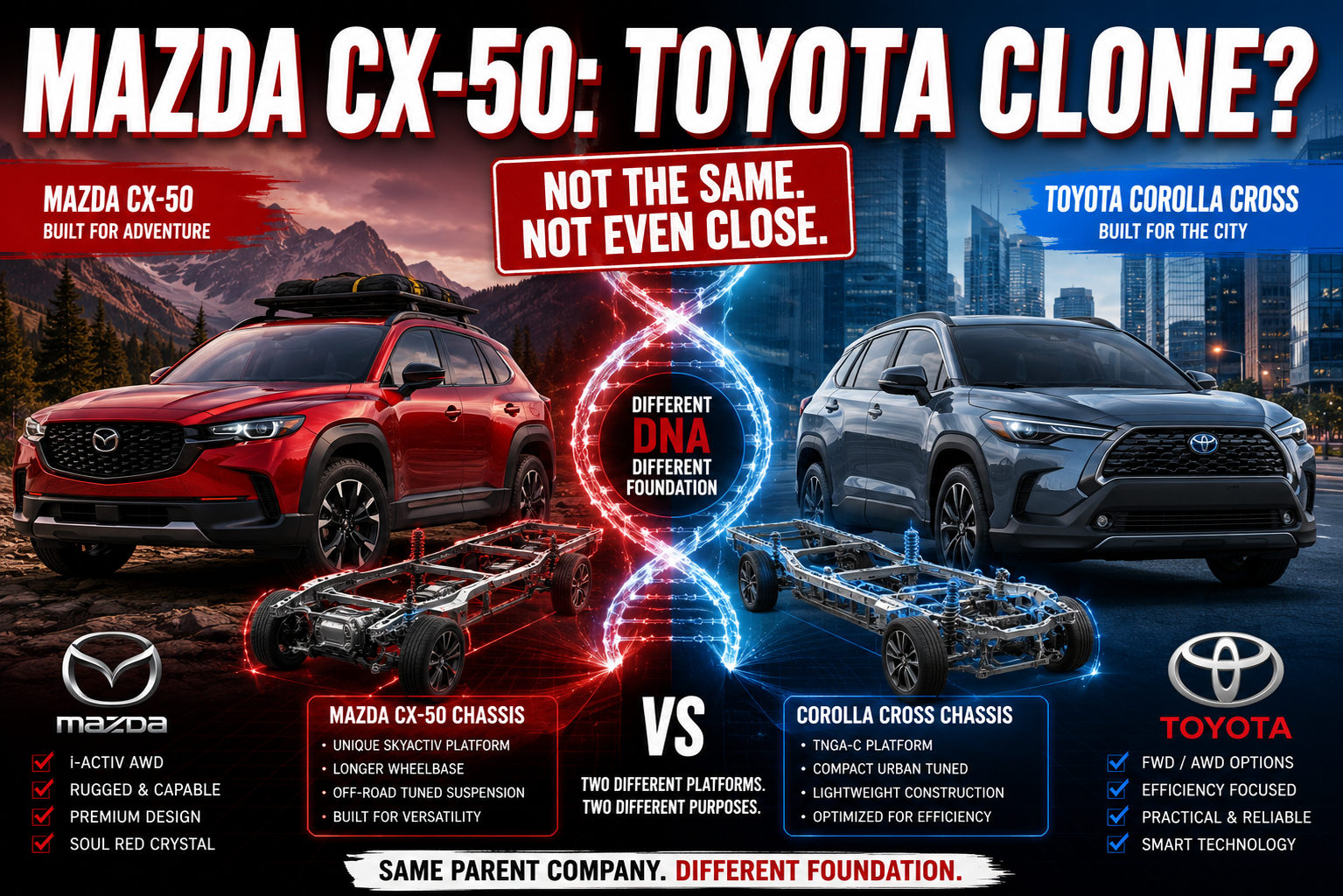
The Mazda CX-50 is a great example of the brand’s modern direction. It’s built at the Mazda Toyota Manufacturing (MTM) plant in Huntsville, Alabama. This facility is the physical manifestation of that alliance we mentioned earlier. While the plant produces both the Mazda CX-50 and the Toyota Corolla Cross, they are built on totally different platforms with distinct engineering specs. If you’re ever curious about where your specific car came from, just look at the VIN: if it starts with “JM1,” it came from Japan. If it starts with “1,” it was built right here in the U.S.
Reliability and Value: Are Mazdas Reliable?
When people ask me, “are mazdas reliable?”, I usually point them toward the latest data. In 2026, Mazda has really earned its spot at the top of the reliability charts. Unlike some brands that seem to trip over themselves trying to cram every experimental gadget into their dashboards, Mazda tends to stick with refined, proven powerplants like their Skyactiv-G engine line.
| Brand Aspect | Reliability Performance |
| Mechanical Failure Rate | Well below the industry average |
| Wear-and-Tear | Very predictable; easy to maintain |
| Warranty Claims | Roughly 13% lower than the industry average |
| Repair Cost | Wallet-friendly due to smart part sharing |
Whether you’re driving the agile Mazda3 or the incredibly popular Mazda CX-5, the engineering focus is clearly on longevity. They don’t seem to suffer from the weird, recurring “personality quirks” that plague some other brands. They are solid, dependable machines. This reputation for reliability is a massive reason why they’ve managed to move upmarket so successfully without losing their core base of fans.
Financing Your Vehicle: Mazda Financial Services
Once you’ve done your research and picked out the model that fits your life, Mazda Financial Services (MFS) is there to handle the business side of things. Think of MFS as the internal support team for your purchase or lease. They’ve been doing this for a long time, and they’re really dialed in to the specific needs of Mazda owners.
Whether you’re hunting for a traditional loan or you prefer to lease, MFS has a pretty slick customer portal where you can manage your account, check your payoff amount, or update your info. Because they are integrated right into the brand’s own ecosystem, the service feels much more personal and specialized than going through some random third-party bank that doesn’t really understand your car or your needs.
Conclusion
When you look past the noise and ask who makes mazda cars, you find a disciplined, fiercely independent company that has navigated a huge transition—from the Ford-partnered era to the autonomous powerhouse they are today. By staying focused on human-centric design, that bulletproof Skyactiv engineering, and smart strategic partnerships, Mazda has carved out a niche that feels “premium” without requiring you to pay a luxury-brand price tag. Whether you’re eyeing the nimble Mazda3, the versatile Mazda CX-5, or the rugged Mazda CX-50, you’re getting a car built by a team that truly controls its own destiny.
Frequently Asked Questions
1. Wait, is Mazda owned by Toyota?
Not at all. Mazda is an independent, publicly traded company. Toyota owns a small 5.1% stake, but that’s just a partnership for sharing research costs and building some cars together. They’re partners, not owners.
2. Would you call Mazda a luxury brand?
They aren’t a “luxury” brand in the traditional sense like Lexus, but they are playing in the “premium” space now. If you sit inside a new Mazda, the fit-and-finish and the materials are definitely aiming to beat the entry-level luxury brands.
3. Where is the Mazda CX-5 built?
The Mazda CX-5 is still built over in Japan at the Hiroshima and Hofu plants. They’re keeping that one close to home to ensure that classic Japanese assembly quality.
4. How can I tell if my Mazda came from Japan or the USA?
It’s easy—check your VIN. If the first character is a “J” or “JM1,” it’s a Japanese-made car. If the first digit is a “1,” it rolled off the line in Alabama.
5. Is a Mazda going to be expensive to keep on the road?
Typically, no. Because Mazda uses the same engines and parts across a lot of their different models, parts are easy to find, and mechanics generally find them straightforward to work on. They have a great track record for not needing unexpected, expensive visits to the shop.











Leave a Reply