
7 Proven Steps to Write a Perfect Cover Letter and Land Your Dream Job:
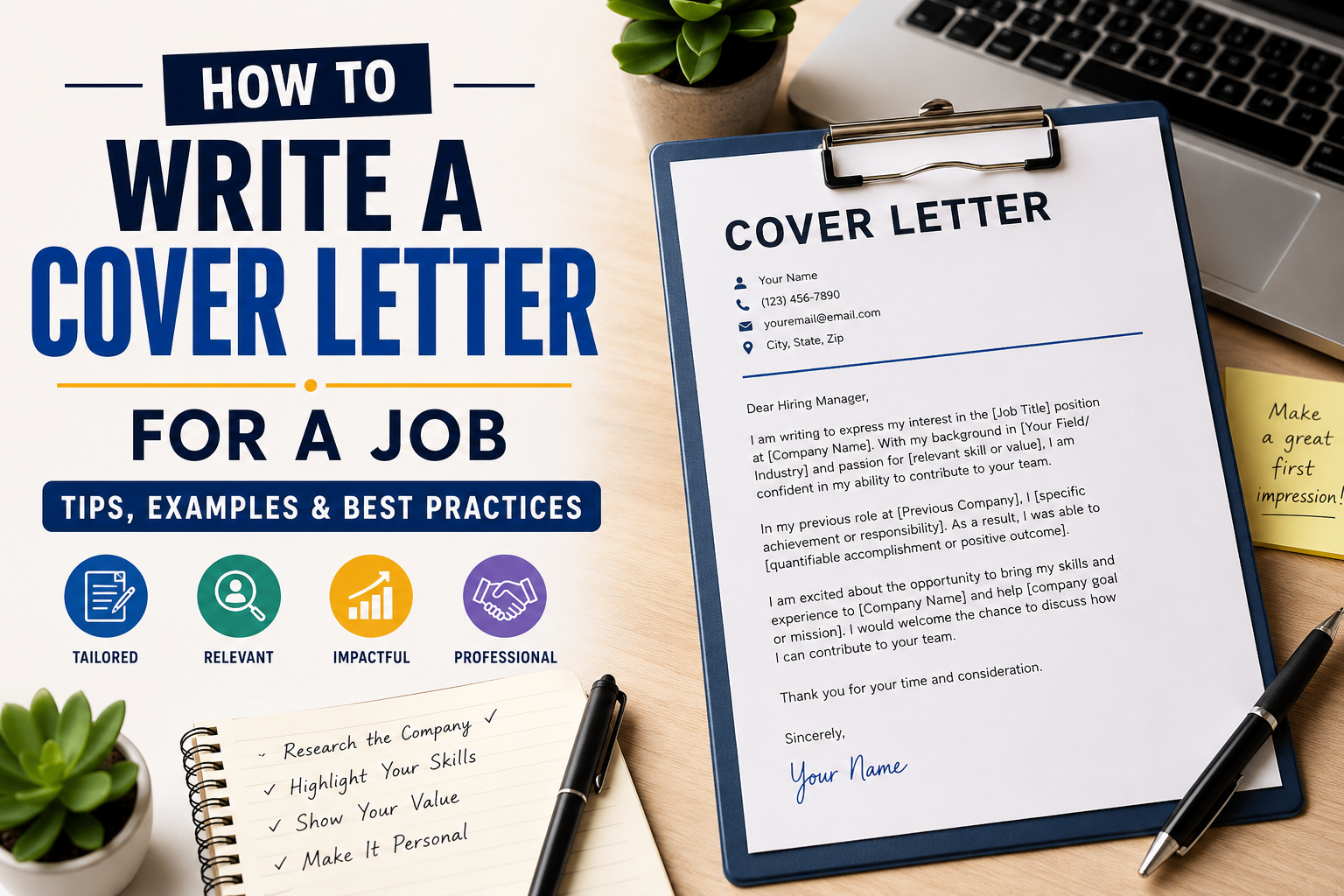
How to Write a Cover Letter for a Job
Why Cover Letters Still Matter in 2026
For years, job seekers have argued about whether cover letters are dead. Some recruiters ignore them completely, while others see them as a deciding factor. The truth sits somewhere in the middle. A resume tells employers what you did, but a cover letter explains why it matters. That small difference can completely change how a hiring manager sees your application. Think of your resume as a movie trailer and your cover letter as the behind-the-scenes story that makes people emotionally invested.
Recent hiring studies show that personalized cover letters still influence interview decisions. One 2026 hiring report found that tailored cover letters increased callbacks by as much as 53% compared to applications without one. At the same time, recruiters also admit they spend less than 30 seconds scanning them. That sounds harsh, but it reveals something important: employers are not reading long essays. They want fast proof that you understand the role and can solve problems.
The modern hiring process is crowded and competitive. Some corporate job postings now receive more than 250 applications. In a pile that large, generic applications disappear instantly. A customized cover letter acts like a spotlight. It signals effort, attention to detail, and genuine interest in the company. Employers may not remember every resume they read, but they often remember a candidate who connected their experience directly to the company’s goals.
There is also another side to the conversation. Some executives and recruiters argue that cover letters are becoming less important because of AI-generated applications and skills-based hiring. Even then, a smart, concise, human-sounding letter still carries weight when it explains something a resume cannot. For example, if you are switching careers, applying after a gap year, or targeting a competitive role, the cover letter becomes your chance to control the narrative instead of letting recruiters guess your story.
Understanding the Purpose of a Cover Letter
A lot of people think a cover letter is simply a summary of their resume. That approach usually fails. Hiring managers already have your resume sitting in front of them. Repeating the same bullet points wastes precious attention. The real purpose of a cover letter is to create context. It answers questions your resume cannot fully explain. Why are you interested in this role? Why this company? What specific value can you bring to the team? Those are the questions employers silently ask while reviewing applications.
Imagine walking into a room full of strangers and trying to introduce yourself. If you only list facts about your life, people may not remember you. But if you tell a short, meaningful story that connects emotionally, people pay attention. A cover letter works the same way. It gives personality and direction to your application. Employers want confidence, enthusiasm, and relevance. They are not just hiring skills; they are hiring a person who can fit into a team and contribute to goals.
Another major purpose of a cover letter is demonstrating communication skills. In many industries, writing matters more than people realize. A poorly written cover letter filled with grammar mistakes or robotic language sends the wrong signal immediately. On the other hand, clear and conversational writing shows professionalism. It proves you can communicate ideas effectively without sounding stiff or overly formal.
Modern employers also look for authenticity. Generic cover letters are often rejected because they sound copied and emotionless. Studies from 2026 hiring reports reveal that recruiters can quickly spot template-based applications. That means your letter should feel targeted and personal. Mentioning company values, referencing the job description, or connecting your achievements to the employer’s challenges makes your application feel real instead of mass-produced.
Preparing Before You Start Writing
Writing a great cover letter actually begins before typing the first sentence. Most people jump directly into writing, and that is exactly why their letters sound generic. Preparation changes everything. Before writing, study the job description carefully. Read it like a detective looking for clues. Employers often repeat keywords and phrases throughout the posting. Those repeated words usually reveal what matters most to them.
For example, if a company repeatedly mentions “team collaboration,” “problem-solving,” and “customer satisfaction,” those themes should appear naturally in your cover letter. This does not mean stuffing keywords awkwardly into sentences. Instead, connect your real experiences to the company’s needs. Imagine the employer saying, “We need someone who can handle this challenge,” and your cover letter responding, “I have already solved a similar problem before.”
Researching the company is equally important. Visit the company website, read recent news, explore social media pages, and learn about their culture. A candidate who understands the company instantly feels more valuable than someone sending the same letter everywhere. Employers want to feel chosen, not randomly selected from a list of hundreds of applications. Even mentioning a recent company achievement or project can create a stronger connection.
Here is a simple comparison table showing the difference between generic and tailored preparation:
| Generic Approach | Tailored Approach |
|---|---|
| Sends the same letter everywhere | Customizes each application |
| Repeats resume details | Connects achievements to company goals |
| Uses vague language | Uses specific examples |
| Focuses only on skills | Focuses on value and impact |
| Sounds robotic | Sounds conversational and human |
Preparation also helps reduce anxiety. Many people struggle with cover letters because they feel forced to “sound impressive.” The truth is, employers care more about clarity than perfection. When you understand the company and role deeply, writing becomes easier because you already know what message you want to communicate.
The Perfect Cover Letter Structure
A strong cover letter structure keeps your message clear and easy to read. Recruiters skim quickly, so organization matters almost as much as content. Think of the structure like a road map. If your writing jumps around randomly, readers get lost. A clean structure guides employers smoothly from introduction to conclusion without confusion.
Start with your contact information at the top, followed by the date and employer details. This section should look professional and organized. After that comes the greeting. Whenever possible, address the hiring manager by name instead of using “To Whom It May Concern.” Small details like this make your application feel more personal.
The opening paragraph is the hook. This is where many candidates fail because they start with boring phrases like “I am writing to apply for…” Recruiters already know why you are writing. Instead, open with enthusiasm and relevance. Mention the role, connect with the company, and introduce one strong reason you are a good fit. The goal is to grab attention immediately.
The body paragraphs are the heart of the cover letter. This section should focus on achievements and problem-solving rather than simply listing responsibilities. Numbers make your claims stronger. Instead of saying “I improved sales,” say “I increased monthly sales by 25% within six months.” Specific results create credibility. Employers trust measurable outcomes more than vague statements.
The closing paragraph should sound confident and forward-looking. Thank the employer for their time, express enthusiasm for the opportunity, and invite further discussion. Avoid desperate language or overused phrases. Confidence works better than pleading. A strong ending leaves the reader with a positive impression that encourages them to move your application to the next stage.
Best Writing Tips for a Winning Cover Letter
The best cover letters feel natural, not robotic. One of the biggest mistakes job seekers make is trying too hard to sound formal. Ironically, overly formal language often creates emotional distance. Recruiters are humans, not robots scanning legal documents. A conversational tone feels more engaging and easier to read.
Short sentences usually work better than long complicated ones. Clarity wins every time. If a sentence feels difficult to read aloud, simplify it. Your goal is communication, not showing off vocabulary. Think of your cover letter like a professional conversation rather than an academic essay. Employers appreciate directness because they review dozens or even hundreds of applications daily.
Another important tip is focusing on value instead of personal gain. Many applicants spend too much time talking about what they want from the company. Employers care more about what you can contribute. Instead of saying, “This role will help me grow my career,” say, “My experience managing customer relationships can help improve client retention.” One statement is self-focused, while the other is employer-focused.
Avoiding common mistakes is equally important. Here are some of the biggest errors recruiters notice:
- Using generic templates without customization
- Repeating the resume word-for-word
- Writing overly long paragraphs
- Including spelling or grammar mistakes
- Making the letter entirely about yourself
- Using weak or passive language
Hiring managers often reject applications because of these small details. In fact, some surveys found that recruiters eliminate candidates based on poor cover letters alone. That may sound brutal, but it shows how important professionalism remains in competitive hiring environments.
Cover Letter Examples for Different Situations
Not every job seeker has the same background, and that is why cover letters should adapt to different situations. An entry-level applicant needs a different strategy than someone changing careers. A remote worker must highlight different strengths than an office-based candidate. Understanding these differences helps create a more effective message.
For entry-level candidates, the biggest challenge is usually lack of experience. The solution is focusing on transferable skills, internships, academic projects, and enthusiasm. Employers hiring beginners often care more about attitude and learning potential than years of experience. If you recently graduated, mention teamwork, leadership roles, or problem-solving experiences from school or volunteer activities.
Career changers face another challenge: explaining why they are moving into a new field. This is where the cover letter becomes incredibly valuable. Without explanation, recruiters may assume you are unqualified or confused about your direction. A strong career-change letter connects previous experiences to the new role. For example, a teacher moving into corporate training can highlight communication, presentation, and organizational skills.
Remote job applications require another adjustment. Employers hiring remote workers worry about productivity, communication, and independence. Your cover letter should directly address those concerns. Mention experience with remote collaboration tools, self-management, and working independently. In a remote environment, trust matters as much as technical skill.
Here is a quick comparison table:
| Situation | Main Focus |
|---|---|
| Entry-Level | Potential and willingness to learn |
| Career Change | Transferable skills and motivation |
| Remote Job | Communication and self-discipline |
| Management Role | Leadership and measurable impact |
| Creative Industry | Personality and originality |
Tailoring your message to your specific situation increases relevance. Employers want to feel like your application was written specifically for them instead of copied from the internet.
AI and Modern Cover Letter Writing
Artificial intelligence has completely changed the job application landscape. Today, many applicants use AI tools to generate resumes and cover letters in seconds. This creates both opportunities and challenges. AI can save time, improve grammar, and help organize ideas. At the same time, recruiters are becoming better at spotting generic AI-generated writing. That is why the human touch matters more than ever.
Recent research shows that AI-assisted cover letters can increase callback rates when properly edited and personalized. The key phrase there is “properly edited.” Employers dislike robotic language because it feels fake and emotionless. A cover letter that sounds like it was written by a machine often lacks personality, detail, and authenticity. Hiring managers want evidence that you genuinely understand the role.
The smartest way to use AI is as a helper, not a replacement. Let AI generate ideas or improve sentence structure, but always rewrite sections in your own voice. Add personal stories, achievements, and company-specific details. Think of AI like a GPS. It can guide the route, but you still need to drive the car yourself.
There are also concerns about bias in AI-based hiring systems. Some recent studies found that automated hiring tools may unintentionally favor certain demographic patterns or communication styles. Because of this, clear and precise writing becomes even more important. Avoid unnecessary complexity and focus on measurable achievements that demonstrate real value.
Modern hiring trends also show a growing shift toward skills-based hiring. Employers increasingly care about portfolios, projects, and practical abilities rather than traditional credentials alone. That means your cover letter should support your overall professional brand. It should connect your resume, portfolio, LinkedIn profile, and achievements into one consistent story that feels credible and memorable.
Conclusion
Writing a powerful cover letter for a job is less about following rigid rules and more about creating a meaningful connection with employers. The strongest letters are clear, personal, and focused on value. They explain not only what you have done, but also why it matters to the company you want to join. In a competitive job market filled with automated applications and AI-generated content, authenticity has become one of the most valuable qualities a candidate can show.
A good cover letter does not need to be dramatic or overly clever. It simply needs to feel relevant and human. Employers want confidence, clarity, and proof that you understand their needs. Whether you are an entry-level applicant, a career changer, or an experienced professional targeting leadership roles, a tailored cover letter can separate you from hundreds of similar resumes.
The hiring world is evolving quickly. Some recruiters skim cover letters, while others rely on them heavily. The safest strategy is not to ignore them completely but to write smarter, shorter, and more targeted letters that respect the employer’s time. A customized cover letter may only take an extra 20 minutes to create, but those 20 minutes could become the difference between getting ignored and getting invited to an interview.
FAQs
1. How long should a cover letter be?
A cover letter should usually be between 250 and 400 words. Recruiters prefer concise letters that quickly explain why you are a good fit for the role.
2. Should I write a cover letter if it is optional?
Yes, especially for competitive jobs or roles where communication matters. Studies show that tailored cover letters can improve interview callback rates.
3. Can I use AI to write my cover letter?
You can use AI tools for ideas and structure, but always personalize the content. Recruiters can often detect generic AI-generated writing.
4. What is the biggest mistake in a cover letter?
The biggest mistake is sending a generic letter that is not customized for the company or role. Employers value relevance and specificity.
5. Do recruiters actually read cover letters?
Some recruiters skim them quickly, while hiring managers may read them carefully. Tailored letters are far more effective than generic ones.





Leave a Reply